
Herbarium History
The University of Warsaw Herbarium (WA) is one of the oldest botanical collections in Poland. It was established in the early 19th century on the initiative of Michał Szubert, and its nucleus consisted of the specimens he had assembled in Paris.
1809–1813 | Paris beginnings
In 1809, 22-year-old Michał Szubert was sent by the Educational Chamber to Paris to train in the natural sciences (Bieliński 1907, vol. 3). There, he was given the opportunity to work in the botanical garden and could build a herbarium from plants cultivated in greenhouses. He also collected specimens during field trips in the vicinity of Paris, among others in the company of Antoine Jussieu, a botanist and director of the Paris botanical garden (Bieliński 1907, vol. 3).
Within the first two years he collected about 4,000 plants. Reports to the Educational Chamber indicate that he also purchased dried “foreign” plants, ordered materials for example from the Swiss mountains, and treated the herbarium as the basic tool for continuing his study of botany after returning home (Bieliński 1907, vol. 3). After four years in Paris, he already had a collection of about 7,000 species.
This herbarium, with the consent and at the expense of the Governing Commission of the Duchy of Warsaw, was brought by Szubert to Warsaw in 1813 (Bieliński 1907, vol. 3). These Paris collections became the beginning of what would later become the University of Warsaw Herbarium.
1816–1851 | Warsaw: the Botanic Garden and the expansion of the Herbarium
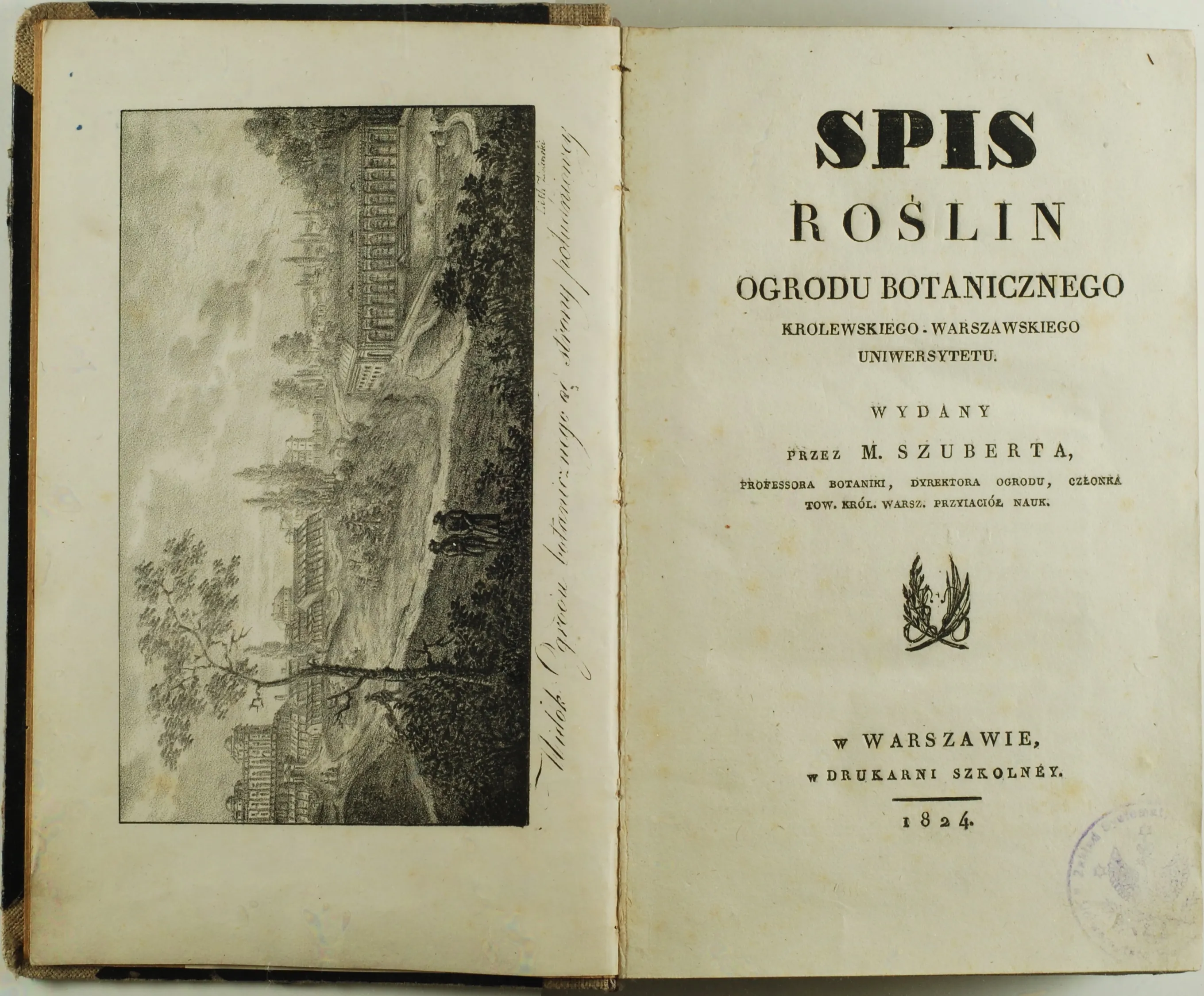
In 1816, Michał Szubert became director of the Botanic Garden in Warsaw. The Garden had to be largely reorganized, so Szubert brought in thousands of native and foreign plants and, in parallel (often together with his students), prepared herbarium specimens from them (Bieliński 1907, vol. 3). The collections also grew thanks to materials donated by people connected with the Royal University of Warsaw and other researchers (Bieliński 1907, vol. 3).
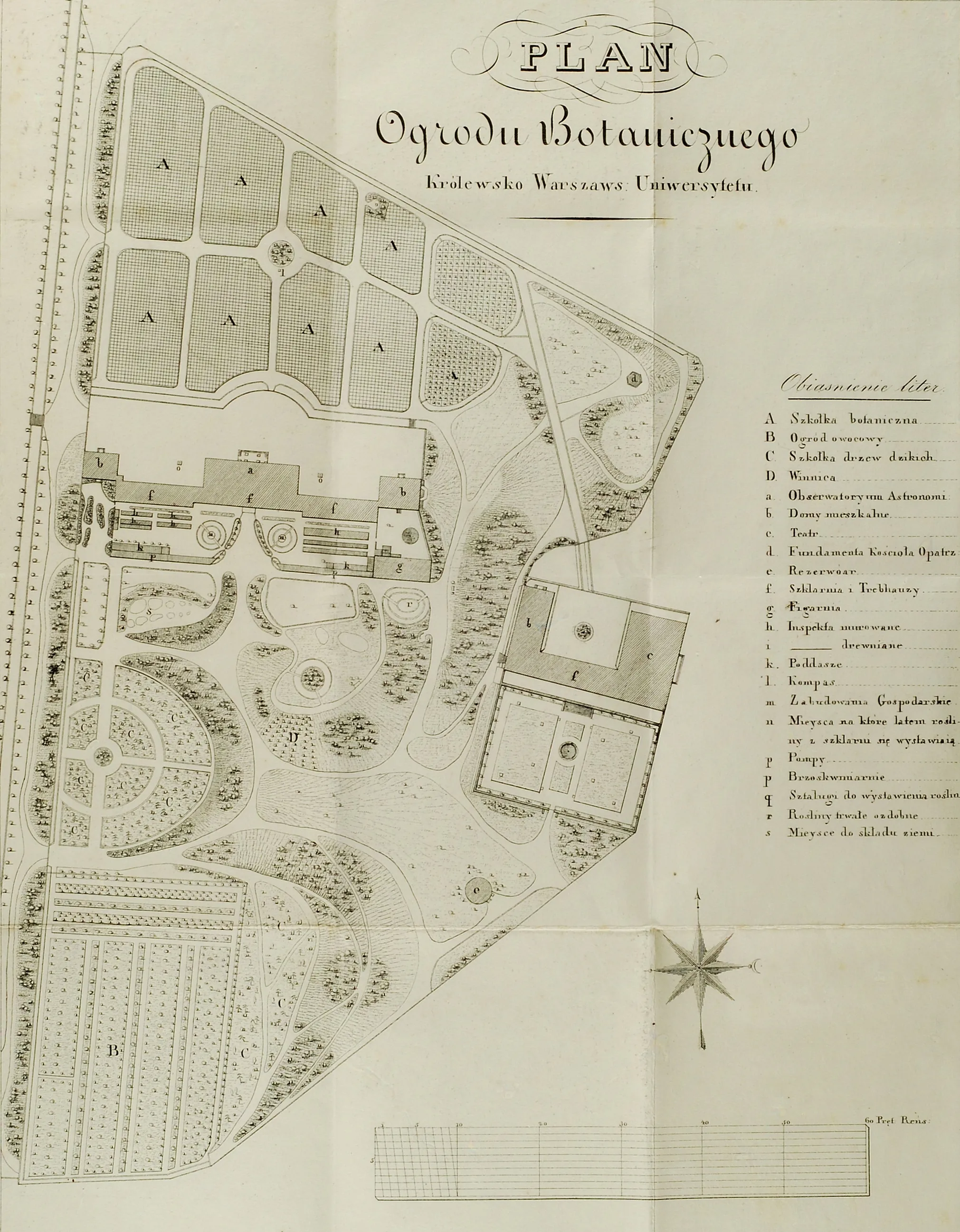
Szubert’s students played an important role. Wojciech Jastrzębowski—an assistant in the natural sciences—every year from 1824 until the University was closed after the November Uprising (1831) led field expeditions around the country, collecting plants for the herbarium. As recorded, his collection “consisted of 1,151 determined [identified] species. To this herbarium Jastrzębowski added 561 species collected earlier, between the years 1824 and 1828” (Bieliński 1907, vol. 1).
At that time, the idea also emerged to create a “herbarium of the flora of the Kingdom of Poland”—a nationwide collection built through the cooperation of many people. The impetus was Szubert’s contacts with Stanisław Cyryna-Dogiel, a teacher from Sejny who studied the local flora and sent materials to Warsaw. Szubert wrote about the idea “to encourage all teachers of the natural sciences in the provinces to take up such a passion for collecting the plants of their area. These shipments should be directed to the botanical garden, where a herbarium of the flora of the Kingdom of Poland would be arranged” (Bieliński 1907, vol. 1). In a letter to the Government Commission he specified a plan developed jointly with Jastrzębowski: “I conceived, together with Mr. Jastrzębowski, the idea of forming two national herbaria, one of which will be kept at the Botanic Garden, and the other will be placed at the Plastic-Botanical Cabinet” (Bieliński 1907, vol. 1). In turn, in a report from February 1830, Jastrzębowski announced that he “intends to complete the ordering (under Professor Szubert’s guidance) of the second national herbarium at the Botanic Garden and to prepare its inventory” (Bieliński 1907, vol. 3). How far this work progressed is difficult to determine today; soon many plans were interrupted by political events.
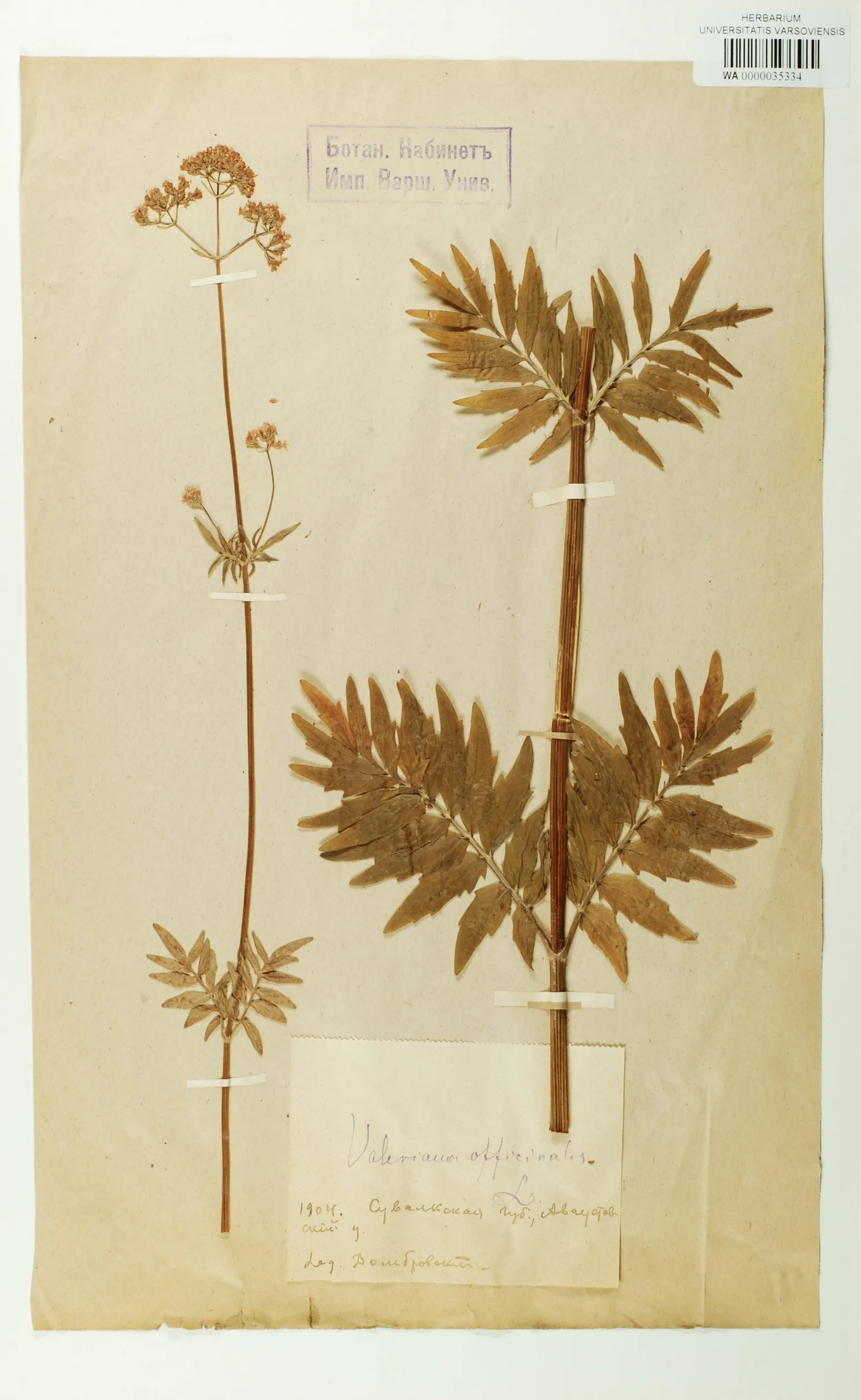
In 1846 Szubert retired. In 1851 he proposed the sale of the herbarium (the source does not indicate to whom), but the transaction did not take place. At that time the collection included almost all species that had ever grown in the Botanic Garden: 14,018 species, including 1,238 native ones (Bieliński 1907, vol. 3).
1851–1914 | Under the Botanic Garden and the Imperial University
After 1851 the herbarium collections remained part of the Botanic Garden’s property, and their care depended on successive heads of the Garden appointed by the Tsarist authorities. In practice, the herbarium functioned “on the side” of the Garden’s everyday work—without a permanent, strong organizational base.
In the 1850s, formal scholarly supervision of the Garden was entrusted to Jerzy Alexandrowicz, a nature teacher at Warsaw’s Real Gymnasium. A key moment came in 1862: in regulations, the Botanic Garden was defined as a scientific institution of the newly established Main School (a Polish higher-education institution in the Russian partition). Two years later Alexandrowicz became director of the Garden and served until 1878. From 1863 he was assisted in herbarium work by Hipolit Cybulski—a gardener who dried collected plants and incorporated them into the collections.
After the Main School was closed (1869) and the Imperial University of Warsaw was established (1870), the University’s Botanical Cabinet oversaw the herbarium. From this period, sheets with Russian stamps and labels written in Cyrillic have survived. While on the one hand exchange of materials with foreign centers developed, on the other hand successive people responsible for the collections did not always treat the herbarium as an important part of the scientific infrastructure. This fostered neglect: parts of the collection deteriorated due to insects and mold.
After Alexandrowicz stepped down, Aleksander Fischer von Waldheim (1878–1897) became director of the Garden. He organized a botanical workshop and emphasized the need to expand the collections, writing about the “poverty of the herbaria” and that every new acquisition was “a necessary need.” He was followed by Włodzimierz Bielajew (1897–1901), a cytologist of European renown, and then Wincenty Chmielewskij (1901–1915). In the final years before World War I, the Garden and its collections had weaker oversight, which did not favor systematic work on the herbarium.
1915–1939 | The University returns and the collections are put in order
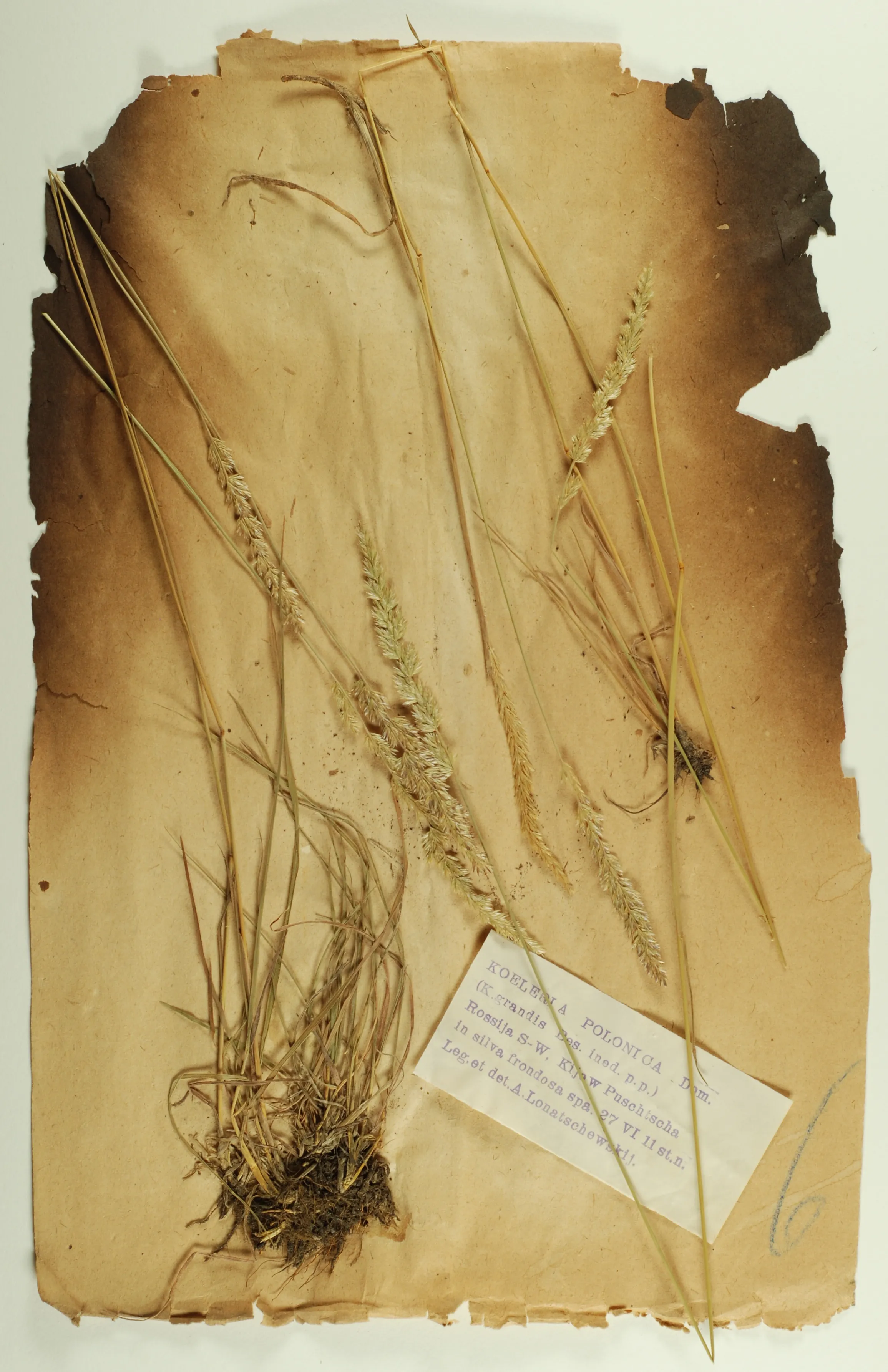
In August 1915 the Russian army left Warsaw, and soon afterward the University of Warsaw resumed activity. At the beginning of 1916 the University took over the Botanic Garden and its collections. In 1915–1916, scientific supervision of the Garden was carried out by Dr. Józef Trzebiński. After years of neglect, the Garden was in very poor condition, and the collections of the so-called Museum of the Botanic Garden—including the herbarium assembled by Szubert—looked little better. Thanks to the involvement of many people, the collection was saved from wartime devastation.
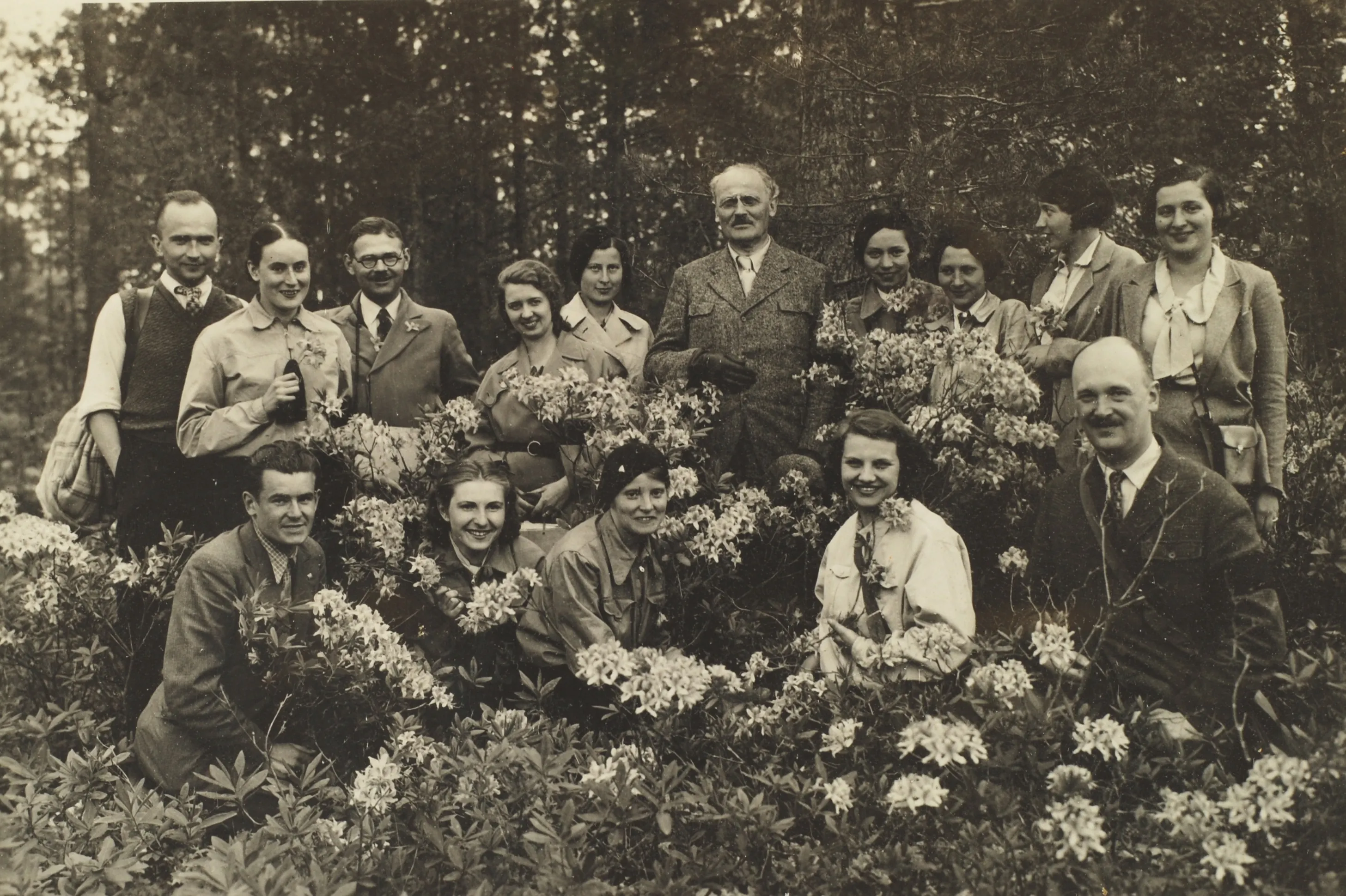
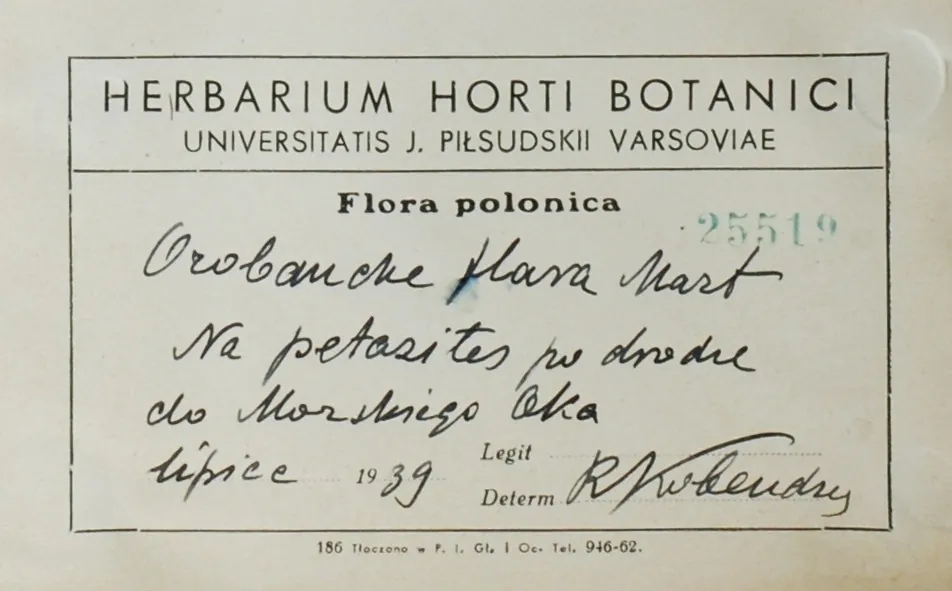
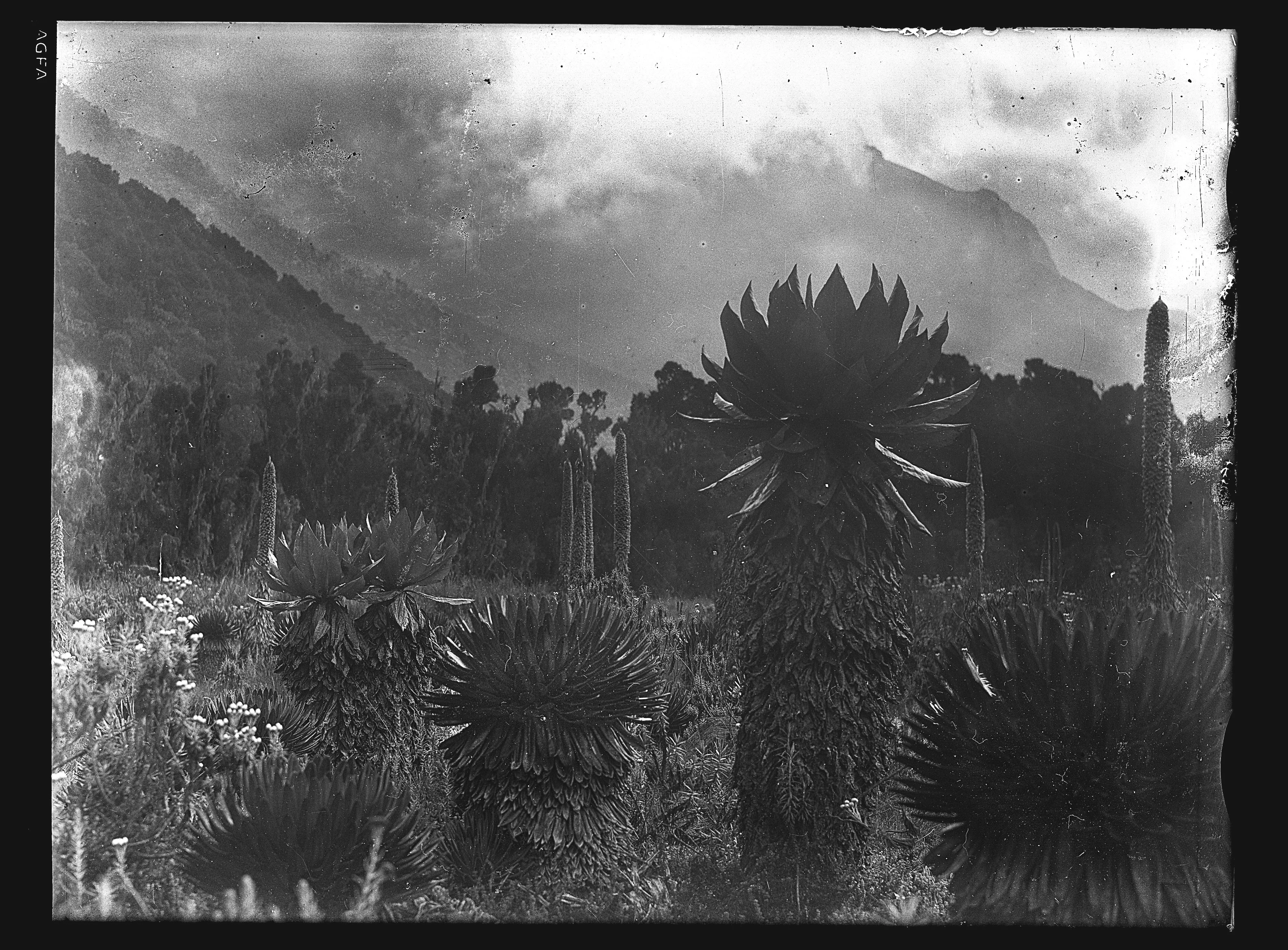
In the interwar period the Herbarium’s holdings grew rapidly, mainly due to donations and the organizational work of the Department of Plant Systematics operating in the Botanic Garden. In the 1920s, Zygmunt Pietkiewicz, forced to leave his native region of Kyiv, donated to the Department a herbarium that he had saved with great difficulty and brought from there. In 1936 the Warsaw Scientific Society donated the herbarium of Franciszek Błoński, which during World War I had been hidden in the shaft of a disused elevator at the Marceli Nencki Institute on Śniadeckich Street in Warsaw. The Warsaw Pharmaceutical Society, in turn, donated very well-preserved herbaria of Ferdynand Karo from Poland, Siberia, and the Far East. The collection also expanded thanks to nature excursions organized for students and to materials gathered in the field.
At the same time, intensive work was carried out to put the collections in order. From 1917 to 1958, this was handled by Czesław Barszcz—by profession a goldsmith—who worked at the Department as a preparator. The curator of the collections was Dr. Stefan Krupko. Dr. Tadeusz Wiśniewski, a staff member of the Department of Plant Systematics and an enthusiast of research expeditions, also participated. He left the Herbarium a very large collection of plants—especially mosses—from the Caucasus, the Balkan Peninsula, and Africa. It was then that thousands of sheets were produced: specimens were identified, labels prepared, and the collection arranged into an increasingly organized whole.
The collections also required constant protection against pests. Very strong chemicals were used at the time: sheets were dusted, among others, with corrosive sublimate (mercuric chloride) and DDT to limit insect damage. When this was insufficient, a one-time disinfestation of the entire building was carried out using hydrogen cyanide. In later years, the collections were also protected by fumigation with carbon disulfide in sealed chambers.
1939–1948 | War, evacuation, and the return of the collections to Warsaw
During World War II the Herbarium was not abandoned, even though the University formally ceased to exist. Czesław Barszcz continued to organize the collections, and Alina Skirgiełło (then a diploma student of the Department, later its long-time head) was responsible, among other things, for the herbarium of Franciszek Błoński.
In September 1942 all residents of the Botanic Garden were ordered to leave the buildings and grounds within a week—the Garden was to become a “Germans only” zone. The move was organized by Garden staff and—despite the occupier’s ban—by Alina Skirgiełło and Tadeusz Wiśniewski (who at that time was no longer even an employee of the Department). Only one truck was available, so the entire operation required careful logistics and work under pressure.
The Herbarium was transported to empty rooms of the looted National Museum in Warsaw. From there it was seized by retreating Germans, taken away, and hidden in a museum in Cieplice. After the war it was found by Stanisław Lorentz, director of the National Museum. Thanks to his actions, as well as the efforts of Professor Bolesław Hryniewiecki and Jadwiga Kobendzina, the collections returned to Warsaw—first to premises at 74 Hoża Street (the temporary seat of the Department of Plant Systematics and Geography).
Soon after the war, further materials began to arrive: in 1946 the Herbarium took over the collections of the Natural History Museum of the City of Szczecin (950 folders according to Professor B. Hryniewiecki’s report from July 1946), and in 1947 plant collections from the Natural History Museum in Jelenia Góra. In April 1948 the entire collection was moved again to its headquarters on Ujazdowskie Avenue.
1948–1990 | The Herbarium on Ujazdowskie Avenue: rebuilding and everyday work
From April 1948 the Herbarium again operated in the Botanic Garden, in the building at 4 Ujazdowskie Avenue. The first years were devoted primarily to reorganizing the collection after its wartime odyssey, completing documentation, and restoring a stable routine of work with herbarium material.
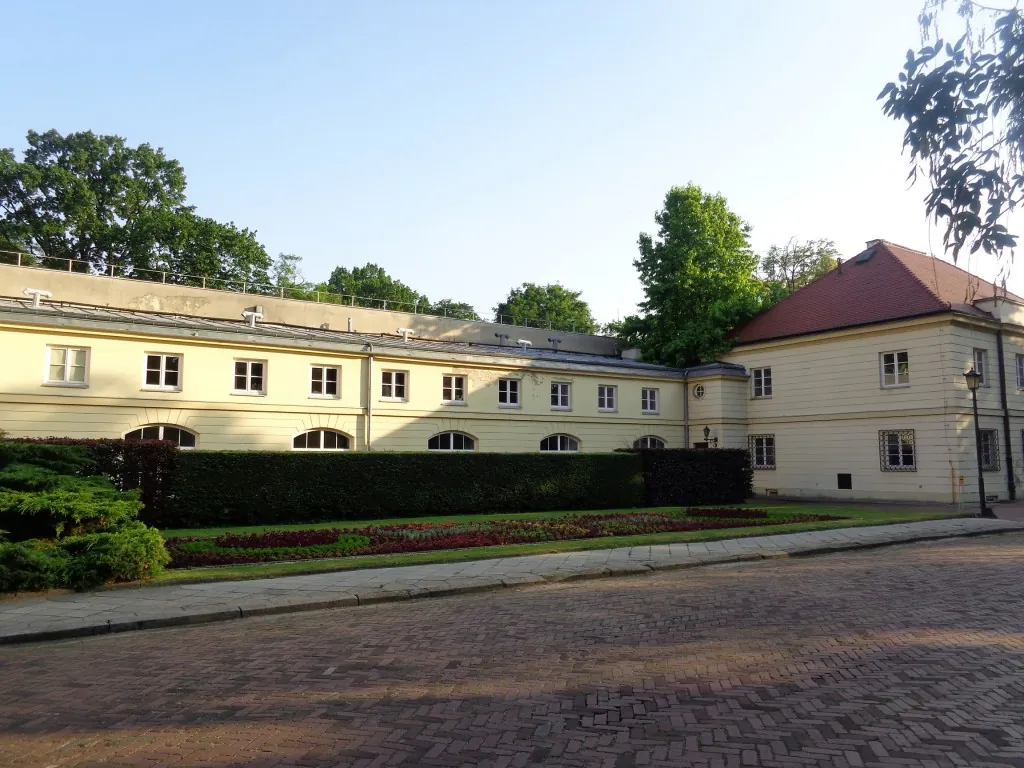
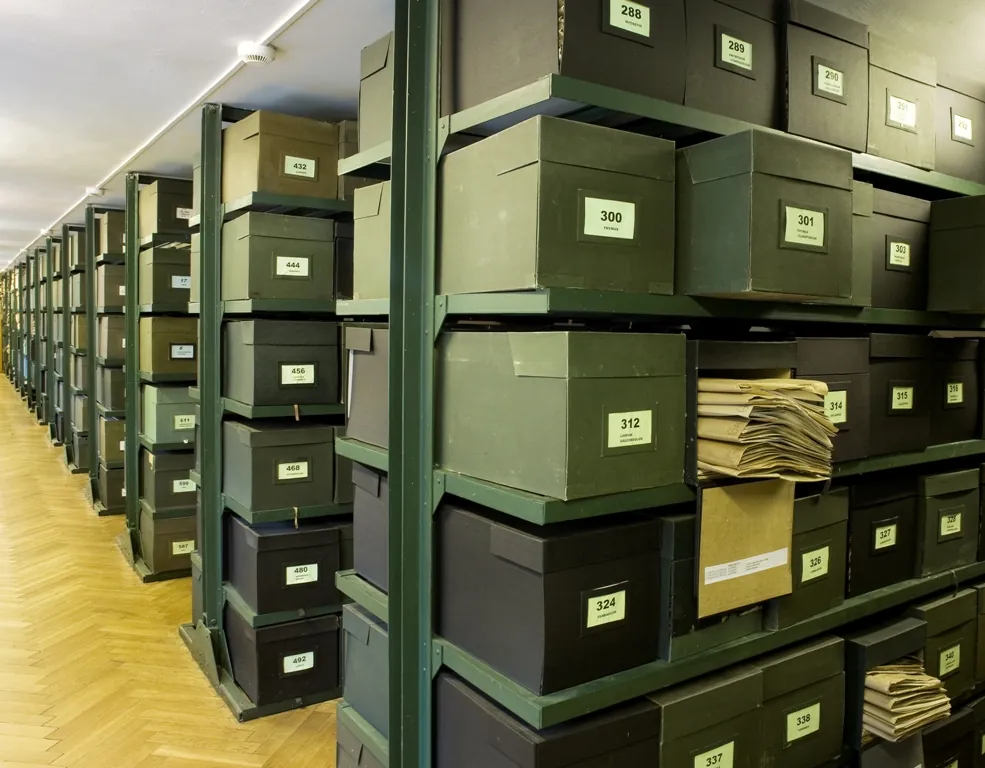
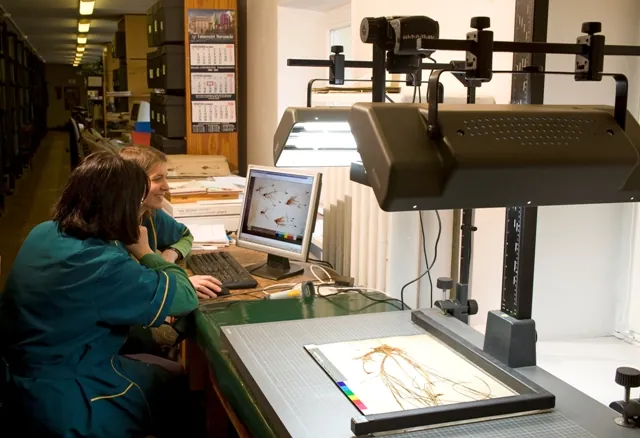
After the war, Czesław Barszcz continued to care for the collections. In 1958 he was joined by Mirosława Kopij—initially as a diploma student of the Department and later as the Herbarium’s custodian. She held this role until 1990. It was a period of painstaking technical work: identifying specimens, preparing sheets and labels, and systematically arranging the holdings.
In subsequent years, herbarium materials from graduate students and staff of the University of Warsaw’s Institute of Botany and Botanic Garden were added (including those of Władysław Matuszkiewicz, Roman Kobendza, and Alina Skirgiełło), as well as materials obtained through inter-herbarium exchange and gifts from people outside the University of Warsaw (including Zdzisława Wójcik, Hanna Czeczott, and Kazimierz Nowak).
At the same time, constant protective measures against pests were carried out—for many years chemical methods typical of the period were used, including fumigation with carbon disulfide in sealed chambers.
1990–today | The most recent history of the Herbarium
After Mirosława Kopij retired in 1990, care of the Herbarium was taken over by Ewa Długoszewska (in cooperation with Jolanta Wareluk), and then by Hanna Leśniewska (from 1992 to 2025). From 1996 to 2008, Dr. Barbara Sadowska was responsible for the collection of fungi and other spore-producing organisms, and the herbarium curator at that time was Dr. Krzysztof Spalik. In May 2008, Dr. Maja Graniszewska became head of the Herbarium.
The year 2008 was also important organizationally: under a resolution of the University of Warsaw Senate of 18 February 2008, the Herbarium was separated from the Department of Plant Systematics and Geography as an independent unit within the structure of the Faculty of Biology. This clarified the Herbarium’s status and facilitated long-term planning (care of the collections, access, and collection development).
During this period, the collections continued to grow, also thanks to large and well-documented donations. In 1999 the herbarium received from the Warsaw University of Life Sciences (SGGW), Faculty of Forestry, H. Mainitz’s bryophyte collection (443 sheets from Germany and the Polish–German borderland from 1930–1942). In 2000 the fungal collection grew thanks to specimens donated by Zbigniew Domański, and in 2002 Maria Klimkiewicz donated a collection of plants from Colombia (264 specimens). In 2012 Dr. Jacek Drobnik (Medical University of Silesia in Katowice) donated a herbarium from a student expedition to Turkey, Egypt, and Syria in 1988 (586 specimens). A year later the holdings gained, among others, a large set of fungi from the Biebrza Basin from Dr. Anna Kujawa, Grzegorz Dubiel’s collection of parasitic fungi (entomopathogenic fungi), a Taiwan collection donated by Maciej Domański (47 specimens), and materials collected by Maciej Wódkiewicz in South America. In 2016 Halina Galera also donated algal sheets from an expedition to Antarctica.
In August 2016 the Herbarium left its former headquarters at 4 Ujazdowskie Avenue and was moved to the Ochota Campus, to the University of Warsaw’s Biological and Chemical Research Centre at 101 Żwirki i Wigury Street. This is where it operates today—Dr. Maja Graniszewska and Professor Barbara Sudnik-Wójcikowska work there, and in September 2025 Dr. Kamil E. Frankiewicz joined them.
Bibliography
- J. Bieliński, Królewski Uniwersytet Warszawski (1816–1831), vol. 1, Gebethner i Wolff, Warsaw 1907.
- J. Bieliński, Królewski Uniwersytet Warszawski (1816–1831), vol. 3, Gebethner i Wolff, Warsaw 1907.